


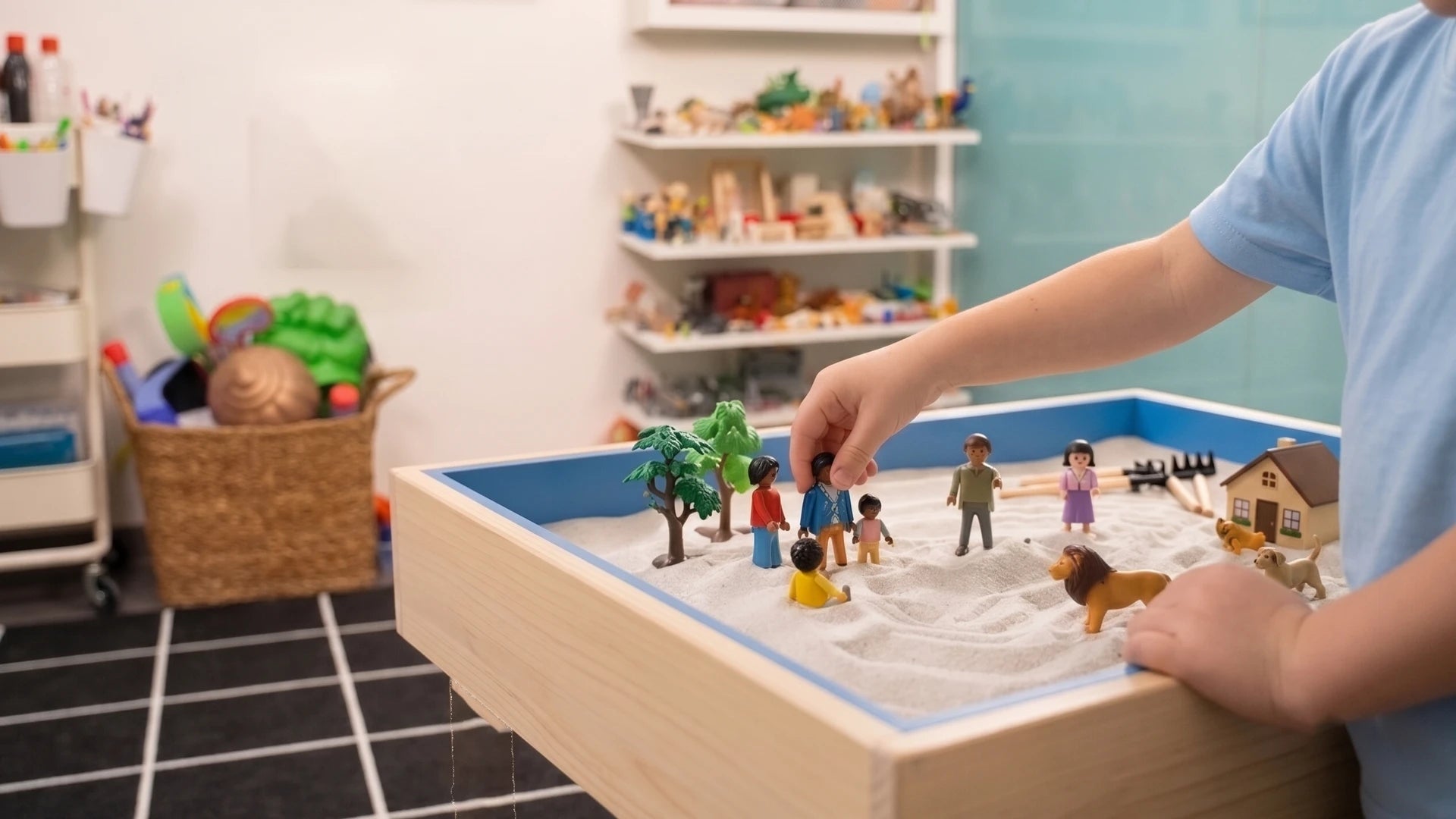

Children say the most
when they are not
saying anything at all.
Scroll to know more
about Play Therapy
Appointment
Ages 4 to 14 | Mumbai Only
Play Therapy gives children a safe, unhurried space to express what they cannot yet put into words, through the language they know best: play.
“I know something is bothering my child. I just do not know how to help.”
“She holds everything in. I can see it. But I cannot reach it.”
- meaningful
- evidence-based
- personalised
- accessible
- psychologist-designed
- certified and awarded

72%
of children show measurable improvement in wellbeing

82%
improvement rate for children with higher needs at referral

3 in 4
children show positive change by both parent and school report

7%
average session time spent talking play does the rest

Who Is It For?
Children do not always have words for what they are feeling. And even when they do, they do not always feel safe using them. Play Therapy meets children where they are.

Withdrawal

Life transitions

Loss and grief

Behaviour changes

General wellbeing
What is play therapy?
A play-based, evidence-led approach to child emotional development.
Play Therapy is grounded in decades of neuroscientific and psychological research showing that play is the natural language of children. Play becomes the therapeutic medium, allowing children to express, explore, and resolve what they cannot yet say.
It is a structured, evidence-based approach delivered by an accredited therapist — not simply supervised play. The therapist observes and responds to what the child communicates through play.
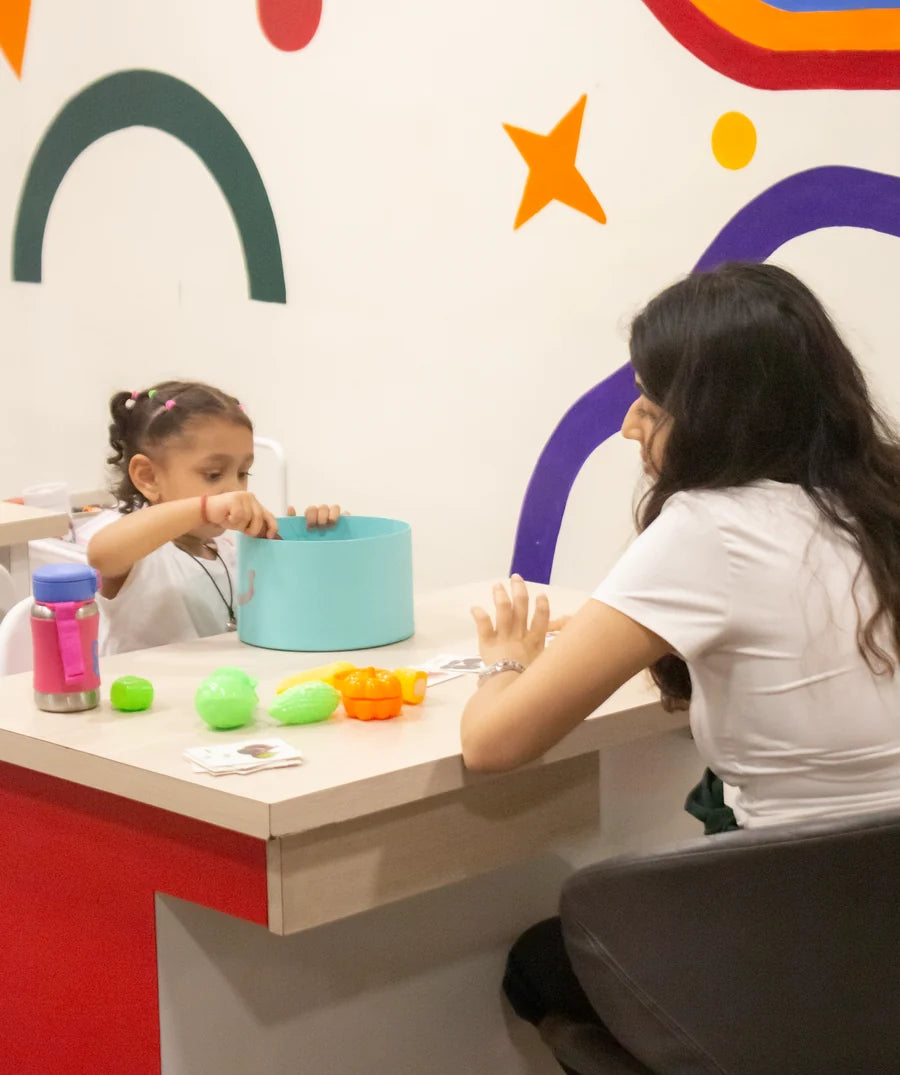

What it addresses
Five areas of development and wellbeing. Research identifies five core areas where Play Therapy produces clinically meaningful outcomes. Most children benefit across several at once.

Hyperactivity

Emotions

Peer Relations

Conduct

Pro-social Behaviour
What to Expect?
-
Parent Consultation
A conversation between you and our play therapist, without your child present. You share what you are observing, what has changed, and what concerns you. We listen, explain our approach, and confirm whether Play Therapy is the right fit.
-
Assessment
The therapist meets with you, the parent, to build a fuller picture of your child's world. Your child does not attend this stage. Using the Goodman's SDQ, we assess across five areas: Hyperactivity, Emotions, Conduct, Peer Relations, and Pro-social Behaviour. The scores inform how sessions are structured from the very first session.
-
Sessions and Reviews
Weekly 40-minute sessions at a consistent day and time. Your child leads. The therapist follows, witnesses, and responds. Progress is reviewed with you regularly. Endings are planned and prepared for, never abrupt.
- 4 - 14 years
- 40 minutes per session
- Weekly. Fixed day and time.
- In person only. At our Mumbai centre.
Session Details
Format: One-on-one with an accredited play therapist
Parent reviews: After every 8th session
Progress measurement: Goodman's SDQ administered at start and end of programme
- 72% of children show measurable improvement in wellbeing
- 82% improvement rate for children with higher needs at referral
- 3 in 4 children show positive change by both parent and school report
- 7% average session time spent talking play does the rest
Led by Hetvi Karia: Certified Play Therapist and the Playologist


How It Compares
Counselling
Depends on the child's ability to verbalise emotions. Limiting for younger children.
Focuses on discussing behaviour and coping strategies. Typically reactive.
Builds coping skills and self-awareness.
Limited adaptability to diverse emotional and developmental needs.
Play Therapy
Unlocks emotions through interactive play. No verbal ability required.
Addresses root causes of behavioural issues through creative and symbolic play.
Strengthens emotional regulation, problem-solving, and social skills for long-term growth.
Flexible for children with trauma, anxiety, ADHD, or autism.
Occupational Therapy
Primarily targets physical and sensory challenges. Limited emotional focus.
Improves behaviour through structured routines and sensory integration.
Develops motor and sensory skills with shorter-term impact on emotional growth.
Customisable for physical needs but offers limited emotional flexibility.
A 20-minute discovery call is all it takes. We'll listen first, and only suggest what genuinely makes sense for you or your loved one.

What Families
Say!
Meera T.
Mother of a 7-year-old Play Therapy
We did not know what was wrong. We just knew something was. After a few months of play therapy, our son started sleeping through the night again. He became himself again. I cannot explain exactly what happened in those sessions, but I do not need to.
Questions We Hear Often
How is Play Therapy different from Occupational Therapy?
Occupational Therapy primarily addresses physical and sensory challenges: motor skills, sensory integration, and daily living skills. Play Therapy addresses emotional wellbeing: helping children process emotions, build resilience, and develop social and relational skills. The two are complementary but distinct. Many children benefit from both.
Is Play Therapy just play? Is it actually doing something?
Play is a child's natural language. Just as adults process experiences through talking, children process theirs through play. In Play Therapy, the play is not random. Every material, every activity, and every interaction is purposefully guided by a trained therapist. What looks like play on the outside is deeply meaningful work on the inside.
How do you measure progress?
Progress is measured using the Goodman's SDQ, the Strengths and Difficulties Questionnaire. This is a clinically validated tool used widely in child mental health settings. It is completed by the parent at the start of the programme and again at the end, giving a clear, evidence-based picture of how the child has developed.
Will my child feel singled out or labelled?
Children are simply told they are going for Special Play Time, which is entirely accurate. The space is designed to feel welcoming, safe, and completely normal. Most children look forward to their sessions. We never use language that makes a child feel different or problematic.
What if my child does not want to go after the first session?
This is normal and worth discussing with the therapist rather than stopping. Resistance is often part of the process. We will guide you on how to navigate it without undoing the work that has begun.